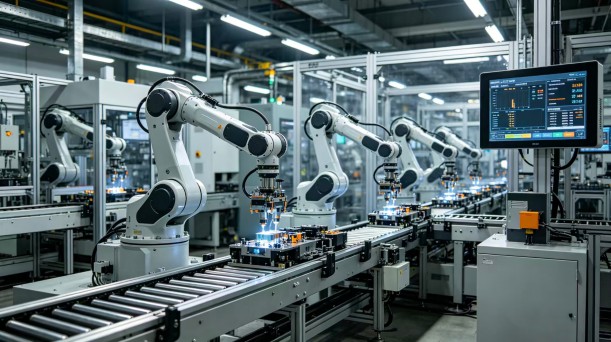
自动化设备的发展主要围绕高精度、高速度以及连续重复运动展开。在自动化生产过程中,即使微小的位置偏差或旋转误差,也可能影响产品加工精度、生产一致性以及最终质量。
因此,自动化设备轴承不仅需要具备良好的承载能力,更需要满足高精度运行、低振动、高重复定位能力以及长期稳定运行等要求。
轴承广泛应用于自动化系统的关键运动部件,包括:
机器人关节系统(Robot Joints)
输送设备滚轮(Conveyor Rollers)
精密齿轮减速机构(Precision Gear Reducers)
往复式传动系统(Reciprocating Transmission Systems)
这些应用直接影响设备的运动精度、定位准确性以及生产效率。
自动化设备中的轴承通常需要满足以下复杂工况:
自动化设备通常需要:
高频率循环运行
快速启动和停止
长时间连续工作
轴承需要具备良好的高速性能和抗疲劳能力。
自动化设备对运动精度要求极高,轴承性能会直接影响:
定位精度
运动稳定性
加工一致性
因此,需要严格控制:
尺寸精度
旋转精度
运转间隙
自动化生产线通常要求:
长时间不停机运行
设备性能稳定
维护周期长
轴承可靠性直接关系到生产效率。
在精密自动化设备中,需要降低:
运行振动
机械噪音
传动间隙(Backlash)
以保证设备运动平稳性。
对于机器人、精密机械等应用,轴承需要保证:
多次循环运动的一致性
高重复定位精度
长期运行稳定性
根据自动化设备结构和运行需求,可选择以下轴承类型:
广泛应用于一般运动机构和支撑系统。
主要特点:
通用性强
高速性能良好
摩擦阻力低
典型应用:
自动化辅助机构
电机支撑系统
适用于输送系统中的稳定支撑。
主要特点:
安装方便
支撑稳定
维护简单
典型应用:
自动输送线
物流设备
适用于传动系统中的高刚性需求。
主要特点:
径向承载能力高
刚性好
适合稳定传动
适用于驱动模块中的复合载荷工况。
主要特点:
同时承受径向和轴向载荷
定位性能良好
适合动力传输系统
适用于安装空间有限的结构。
主要特点:
结构紧凑
单位体积承载能力高
节省安装空间
适用于机器人关节等高精度应用。
主要特点:
高刚性
高旋转精度
可承受多方向载荷
适用于轻量化和高精度定位场景。
主要特点:
重量轻
空间占用小
精度高
适用于紧凑结构中的多方向轴向载荷应用。
主要特点:
结构紧凑
可承受双向轴向载荷
节省安装空间
与重工业或普通机械设备不同,自动化及食品相关应用更加关注:
“洁净 + 精密 + 稳定”
三大核心需求。
主要区别包括:
在食品、医疗、精密自动化等领域:
不锈钢材料
防腐蚀设计
往往比单纯提高负载能力更加重要。
轴承润滑需要考虑:
防止润滑脂泄漏
避免产品污染
满足洁净生产要求
轴承运行精度会影响:
加工精度
产品一致性
生产合格率
特别是在:
自动化设备
精密仪器
高速生产线
中,低噪音和低振动是重要指标。
自动化生产通常要求:
长时间连续运行
减少停机维护
保持稳定产能
因此,轴承可靠性直接影响生产效率。
对于自动化设备制造商(OEM)和系统集成商而言,轴承选型通常重点关注:
根据应用环境选择:
不锈钢轴承
防腐蚀轴承材料
特殊表面处理方案
重点关注:
密封结构
防污染能力
潮湿环境适应性
包括:
尺寸精度
运转精度
振动等级
确保:
安装匹配
运行稳定
满足设备设计要求
优质轴承方案能够帮助客户:
降低维护频率
减少停机时间
提升设备生命周期价值
对于食品、医药及洁净生产环境,需要关注:
材料合规性
卫生要求
润滑安全性
自动化设备轴承的核心价值不仅在于支撑旋转运动,更在于保证设备实现:
高精度定位
高重复运行
低振动传动
长时间稳定生产
在许多自动化应用中,轴承性能会直接影响产品一致性、生产效率以及设备整体可靠性。
对于OEM制造商和设备集成商而言,选择符合应用需求的精密轴承解决方案,是提升设备竞争力和降低生命周期成本(TCO)的关键。
2026-06-18
上一篇:汽车整车行业应用(货车、乘用车、和新能源汽车)