汽车行业应用(乘用车、卡车和电动汽车系统)

汽车行业应用(乘用车、卡车和电动汽车系统)

汽车行业应用(乘用车、卡车和电动汽车系统)

In modern mechanical systems, bearings are not just standard components—they are critical performance elements that directly influence efficiency, reliability, and total lifecycle cost. For global OEM manufacturers, distributors, and maintenance teams, selecting the right bearing type means fewer breakdowns, lower maintenance costs, and more stable equipment performance under real working conditions.

Below is a practical breakdown of how bearings are applied in two high-demand industries: automotive engineering and agricultural machinery.

The automotive industry demands a balance between high speed, high precision, and long service life. With the rapid development of electric vehicles (EVs) and lightweight vehicle design, bearing performance requirements are becoming even more strict.

Key Application Systems

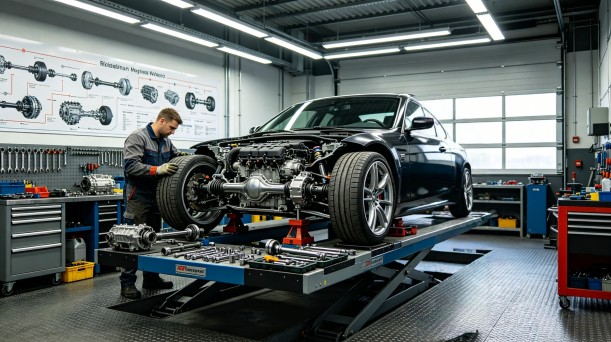
Bearings are widely integrated into core automotive subsystems, including:

  • Wheel hub assemblies for passenger cars, trucks, and EV platforms

  • Manual and automatic transmission systems

  • Differential systems for torque distribution

  • Engine cooling water pumps and auxiliary drive systems

  • Chassis drivetrain components

  • Belt tensioners and idler pulley systems

These applications are directly related to vehicle safety, energy efficiency, and driving stability.

Working Conditions & Engineering Challenges

Automotive bearings typically operate under:

  • Continuous high-speed rotation (especially in EV motors and wheel hubs)

  • Frequent acceleration and braking cycles (start–stop stress)

  • Combined radial and axial loading conditions

  • Constant vibration and torque fluctuations

  • Strict noise, friction, and energy-loss requirements

For EV applications in particular, additional challenges include higher rotational speeds, electrical insulation requirements, and thermal stability under long-distance driving conditions.

Bearing Selection Considerations

To meet these technical requirements, different bearing structures are applied depending on system design:

  • Wheel hub bearing units – integrated, sealed, and maintenance-free design for reliability and assembly efficiency

  • Tapered roller bearings – ideal for combined axial and radial loads in drivetrains and differentials

  • Cylindrical roller bearings – high radial load capacity for gearbox and transmission systems

  • Angular contact ball bearings – precision support for axial + radial combined loads

  • Deep groove ball bearings – versatile solution for auxiliary systems and high-speed rotation

  • Needle roller bearings – compact design for space-limited transmission structures

For OEM buyers, consistency in tolerance, noise level (NVH), and fatigue life are often more important than nominal load rating alone.