In heavy industries such as construction machinery and mining metallurgy, bearings are not just standard components—they are critical parts that directly determine equipment reliability, downtime cost, and overall operational efficiency. Different working conditions place very different demands on load capacity, impact resistance, and environmental durability. Improper selection often leads to premature failure, frequent maintenance, and even unexpected production shutdowns.
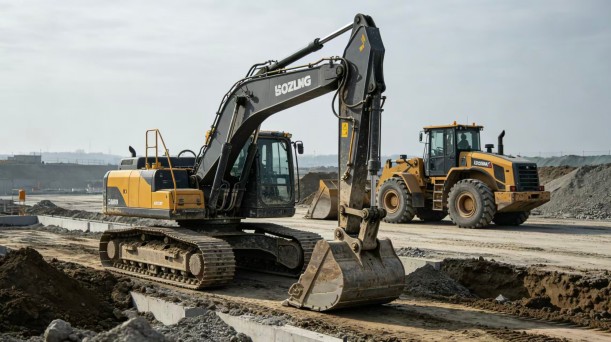
Construction machinery is widely used in excavators, wheel loaders, forklifts, and road rollers. These machines operate in harsh environments with strong impacts, frequent start-stop cycles, and multi-directional loading, placing extremely high demands on bearing systems.
Boom swing mechanisms, bucket transmission systems, wheel hub assemblies, hydraulic motors, gearboxes, and steering systems.
High-impact loads from rock and soil operations
Frequent heavy-load start-stop cycles with sudden load changes
Complex multi-directional and alternating stress conditions
Continuous exposure to dust, mud, and vibration
Long maintenance intervals requiring stable service life
Under these conditions, bearings must balance load capacity and impact resistance:
Tapered roller bearings: ideal for combined radial and axial loads
Spherical roller bearings: accommodate misalignment and heavy impact loads
Crossed roller bearings: high rigidity for slewing applications
Four-point contact ball bearings: compact design for bidirectional axial loads
Spherical plain bearings: suitable for oscillating and shock conditions
Needle roller bearings: compact structure for high load, low-speed applications
Deep groove ball bearings: general-purpose support positions
Cylindrical roller bearings: high radial load capacity for drive and reduction systems
In construction machinery, bearings are not only required to “rotate,” but to maintain stable performance under impact and misalignment conditions.